
ORAL HEALTH
Traditional or invisible orthodontics? Learn the differences
Can you imagine having the perfect smile with a treatment that's right for you and pain-free? This is now possible. We'll tell you our secret ingredient for making the treatment right for you and pain-free.
How do you know if you need orthodontics?
Do you dream of having the smile you want, with a treatment designed for you and no pain? Today it's possible. We break down the difference between traditional and invisible orthodontics so you can choose based on real information, not just trends.
Improving your bite, achieving a nicer smile, or correcting the position of your teeth are some of the goals orthodontics can help you reach. To know if you need it, we do a diagnosis based on a physical exam and a conversation with you about your expectations and questions about treatment.
What is orthodontics?
It’s the branch of dentistry in charge of aligning and leveling the teeth and, in some cases, correcting the position of the jaws to restore the bite to a proper position. It relies on fixed or removable systems that, through controlled pressure, gradually move the teeth into the desired position.
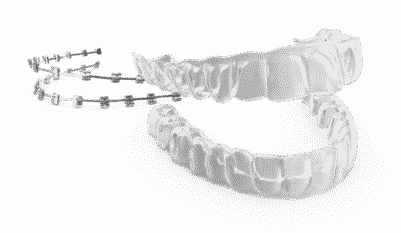
Traditional orthodontics uses brackets, wires, and elastics. In invisible orthodontics, the main tool is the clear aligner: a removable device designed to correct tooth position and improve the bite from an aesthetic standpoint.
What can be corrected with each type of orthodontics?
Both can treat problems such as closing gaps between teeth, teeth at different heights or positions, facial changes associated with a bad bite, and preparing the position of the teeth before jaw surgery, when the case requires it.
Differences between traditional and invisible orthodontics
Traditional orthodontics corrects deeper bite problems more forcefully, such as a crossbite. It uses square brackets attached to the teeth and connected by a sturdy metal wire — that's why its main material is stainless steel.


Real case of a patient from the clinic, during treatment with brackets.
Invisible orthodontics, on the other hand, uses thermoplastic polyurethane aligners, a non-toxic material that’s easy to remove when eating. There are also variants of traditional brackets installed on the inner side of the teeth, or made of ceramic or sapphire to make them less noticeable.
In general, brackets are more resistant and correct faster, while the result of invisible orthodontics largely depends on the patient's discipline in wearing the aligner as many hours as possible. Brackets, being fixed, require a longer adjustment period and can cause discomfort inside the mouth while the patient gets used to them.
What makes us different?
Our difference at MD Dental Services, led by Dr. David Martinez, maxillofacial surgeon, is being with you from the very first moment you arrive at the office, with a treatment plan designed for your needs and the least pain possible.
We use 3D modeling and dental scanning to show you, before starting, what your teeth would look like once treatment is finished. We also take into account your diagnosis, physical exam, and X-rays to choose the most suitable treatment for you — and we complement the process with laser therapy to help manage pain and encourage faster tooth movement.
As with any orthodontic process, following the care instructions is key: much of the final result depends on your own self-care.
If you want to know which treatment is right for you, Dr. David Martinez and his team are with you from diagnosis through to the result. Check out other patients’ testimonials, and remember you can book an appointment at our offices in Bogota or Cajica.

Written and reviewed by
David Martinez, Maxillofacial Surgeon
Expert and pioneering maxillofacial surgeon, with over 10 years of experience in orthodontics, smile design, and treatments using 3D planning technology. Graduate of Pontificia Universidad Javeriana.
Book an appointment →